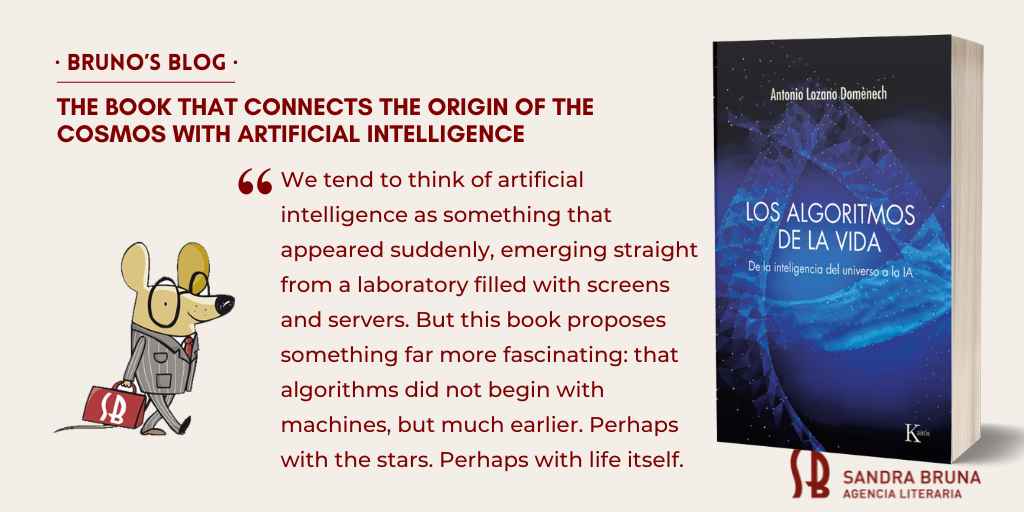
We tend to think of artificial intelligence as something that appeared suddenly, emerging straight from a laboratory filled with screens and servers. But The Algorithms of Life (Los algoritmos de la vida) by Antonio Lozano Domènech proposes something far more fascinating: that algorithms did not begin with machines, but much earlier. Perhaps with the stars. Perhaps with life itself.
This book transforms a technological subject into a deeply human reflection. Because it talks about artificial intelligence, but also about patterns, evolution, and the invisible structures that have shaped the universe from its earliest sparks to our conversations with a screen.
The Algorithms of Life blends popular science, philosophy, sociology, and spirituality with unusual ease. Antonio Lozano Domènech manages to explain complex concepts without falling into either cold academic language or the naïve enthusiasm that often surrounds everything related to AI. The result is an essay that constantly sparks curiosity, as if each chapter were opening a new door within the same labyrinth.
The author argues that intelligence does not belong solely to human beings or machines. There are much older forms of intelligence: those that organize galaxies, ecosystems, and human communities. Ancient algorithms that made cooperation, language, consciousness, and ultimately the creation of modern artificial intelligence possible.
And this leads to another of the book’s major themes: the future. Without resorting to easy catastrophism or empty promises of a technological utopia, it asks a far more important question: what are we going to do with this new intelligence? As AI becomes part of our lives, we are forced to confront ethical, social, and human decisions that are already shaping our reality.
The author’s perspective is particularly compelling. Antonio writes not only from an academic or business background, but also from a personal and spiritual quest that runs throughout the book. This gives the essay a distinct sensitivity. Its goal is not to impress readers with technical jargon, but to invite them to think.
If you enjoy books that connect science and philosophy without sacrificing clarity, The Algorithms of Life may become one of those reads that lingers in your mind long after you finish it. Because it is about artificial intelligence, but also about us: how we got here and why we have been living alongside algorithms for far longer than we ever imagined.