No one is ever ready to say goodbye to their child. There are no words to fix such a loss, nor an explanation to ease a pain that defies all kinds of logic. And yet, some people manage to find the strength to write from that unimaginable place and reach out to those who will one day walk the same path.
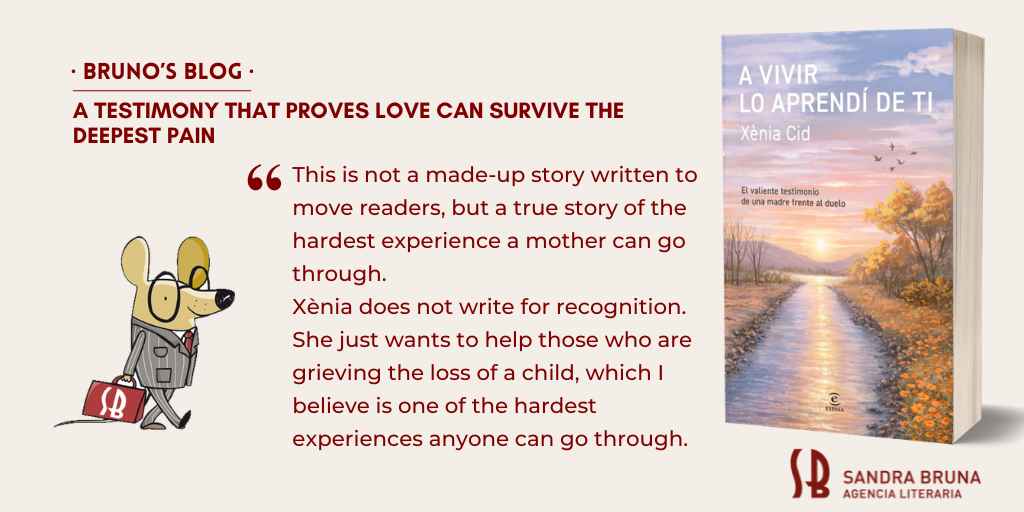
A vivir lo aprendí de ti (You taught me how to live) by Xènia Cid comes from that very place. This is not a made-up story written to move readers, but a true story of the hardest experience a mother can go through.
Arnau was only nine years old when he passed away after a long battle with a rare disease, Fanconi anemia. The devastation was overwhelming. But over time, Xènia Cid found in writing a way of preserving everything her son had left in the lives of those who loved him. Sometimes a short time with someone is enough to leave an everlasting impression.
In A vivir lo aprendí de ti, the author shares these lessons with a remarkable honesty. She reaches out to those readers who have experienced loss to remind them that love, memory, and hope can prevail even in the deepest pains.
This is a book that offers comfort without preaching, support without judging, and finds light where it once seemed impossible. Its pages delve into grief, gratitude, resilience, and the deeply human ability to move on and learn to carry those we have lost in a different way.
It is not a coincidence that writing plays such an important role in Xènia Cid’s life. Before this book, she published the children’s story “Arnau tiene una enfermedad escondida” (Arnau has a hidden disease), inspired in her son’s experience, to help other families explain this disease to young children. After his death, writing became more than just telling stories. It became a refuge for her and a way of keeping his son’s memory alive.
Today, Cid helps people that are experiencing grief, especially mothers who have lost their child. That experience is present in every page of A vivir lo aprendí de ti, endowing it with a sensitivity that can only come from real life experiences and not theory.
Personally, meeting Xènia was deeply moving, and from the very beginning I wanted to help her make this dream come true. I am sure many of the publishers and editors reading this blog have children and know that you can never imagine something like this happening to you. But this story will help you be a little more human and empathize with those who are suffering. Xènia does not write for recognition. She just wants to help those who are grieving the loss of a child, which I believe is one of the hardest experiences anyone can go through. Thank you, Xènia, for your generosity.
If you are looking for a moving book that does not rely on artifice and will stay with you long after you turn over the final page, A vivir lo aprendí de ti should be on your reading list.