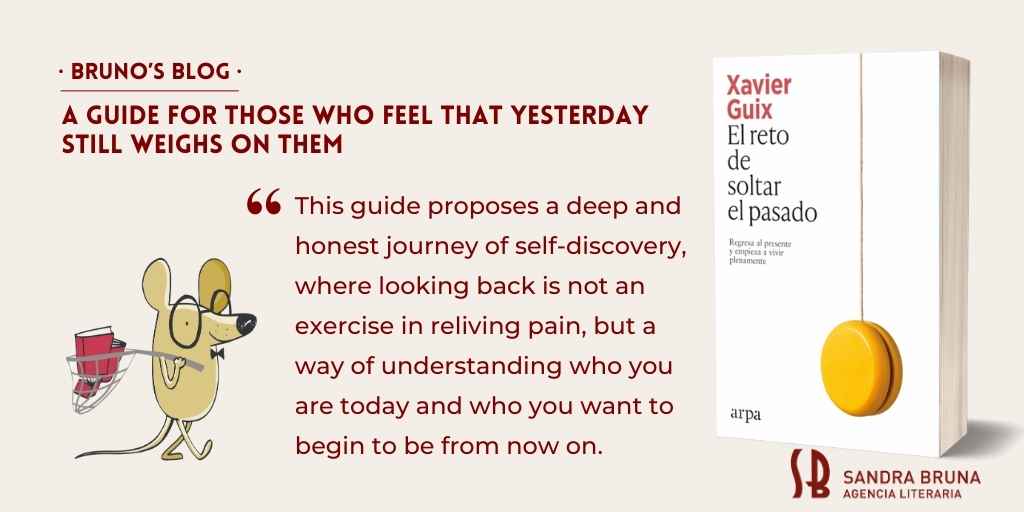
The Challenge of Leaving the Past Behind starts from a premise that is both uncomfortable and liberating: even if you believe you have overcome it, your past is still writing lines in the way you love, choose, get angry, and dream in the present. This book does not aim to erase what you have lived, but to help you understand it, so it stops directing your life from the shadows.
Because the past is not only trauma. It is also identity. Even if you do not identify major wounds, your history has shaped you. Invisible loyalties, family expectations, the decisions you made to survive emotionally… all of this is still operating. This guide proposes a deep and honest journey of self-discovery, where looking back is not an exercise in reliving pain, but a way of understanding who you are today and who you want to begin to be from now on.
Throughout its pages, the author accompanies you in revisiting what still weighs on you: guilt, regret, remorse, resentment, or nostalgia, through an accessible approach that combines psychology, contemporary thought, and classical tradition. The question that runs through the book is as direct as it is necessary: can you be happy while carrying an unresolved past? And the answer is not an optimistic slogan, but a process. Understand. Reinterpret. Integrate. Only then it is possible to let go without denying, to move forward without amputating parts of your story.
Xavier Guix, who holds a degree in Psychology and has solid training in clinical psychopathology, contemporary thought, and classical tradition, develops his therapeutic work at Kairós Institute and combines private practice with teaching at universities and business schools. He is also a professor in personal development and leadership programs such as those of the Borja Vilaseca Institute (Kuestiona). All this experience translates into a rigorous yet deeply human approach, where theory is always at the service of real transformation.
He has published numerous titles, including Neither Do I Explain Myself, Nor Do You Understand Me and The Problem of Being Too Good. The Challenge of Leaving the Past Behind continues this line of reflection, but with a particularly intimate proposal: to review your emotional biography as if you were putting in order a house you want to inhabit peacefully again.
This is not a book to read quickly or to underline beautiful phrases and carry on unchanged. It is an invitation to pause and ask yourself which parts of your story are still asking for attention. If you feel that something from yesterday still conditions your present, this book may be the first step toward a more conscious freedom. Perhaps it is not about changing your past, but about changing the way you carry it with you.